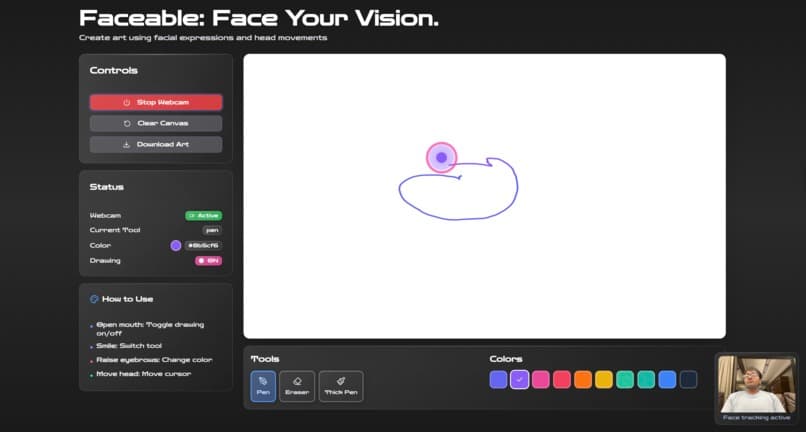
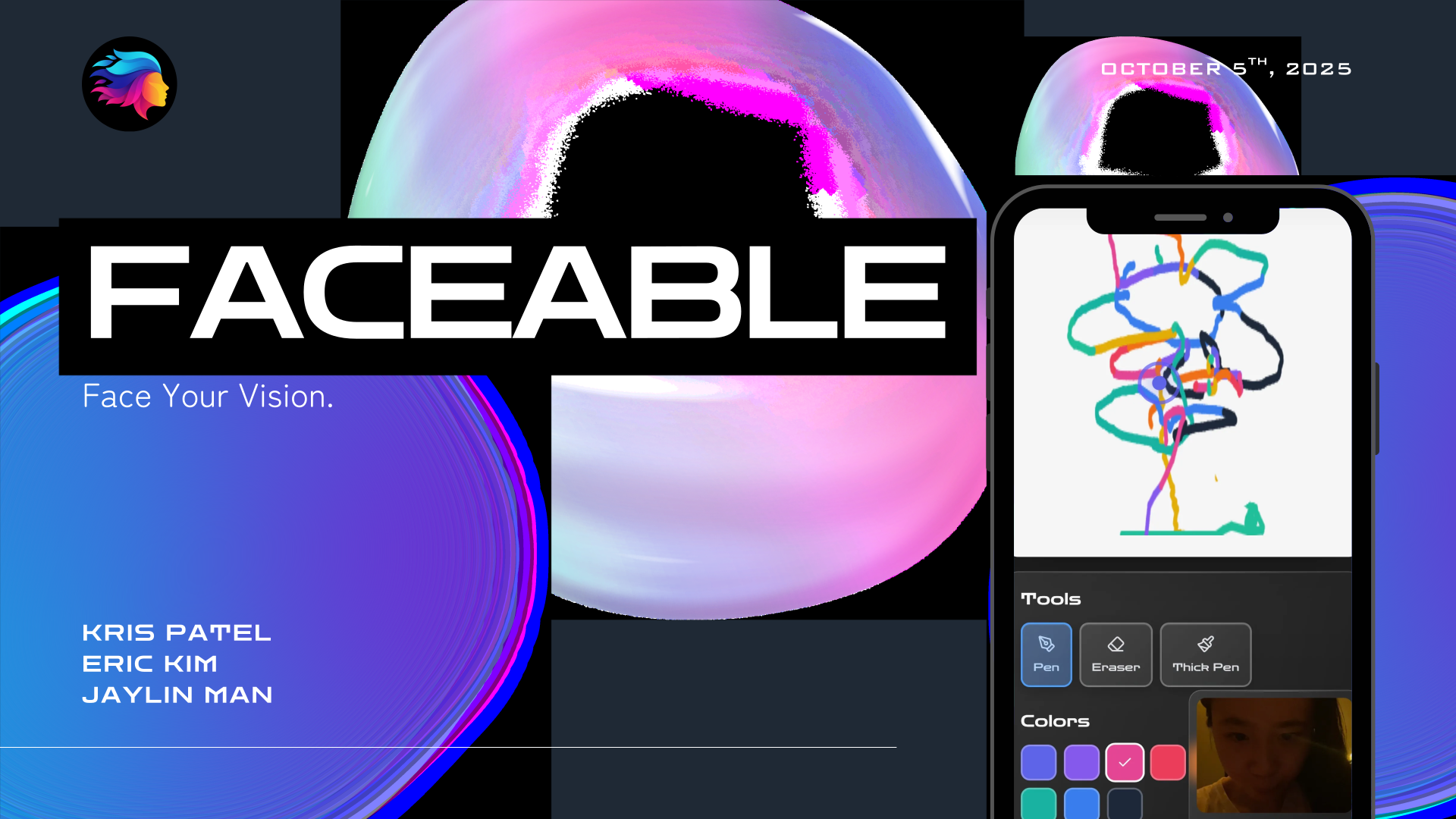
Description
Inspiration &
Vision
Why we started.
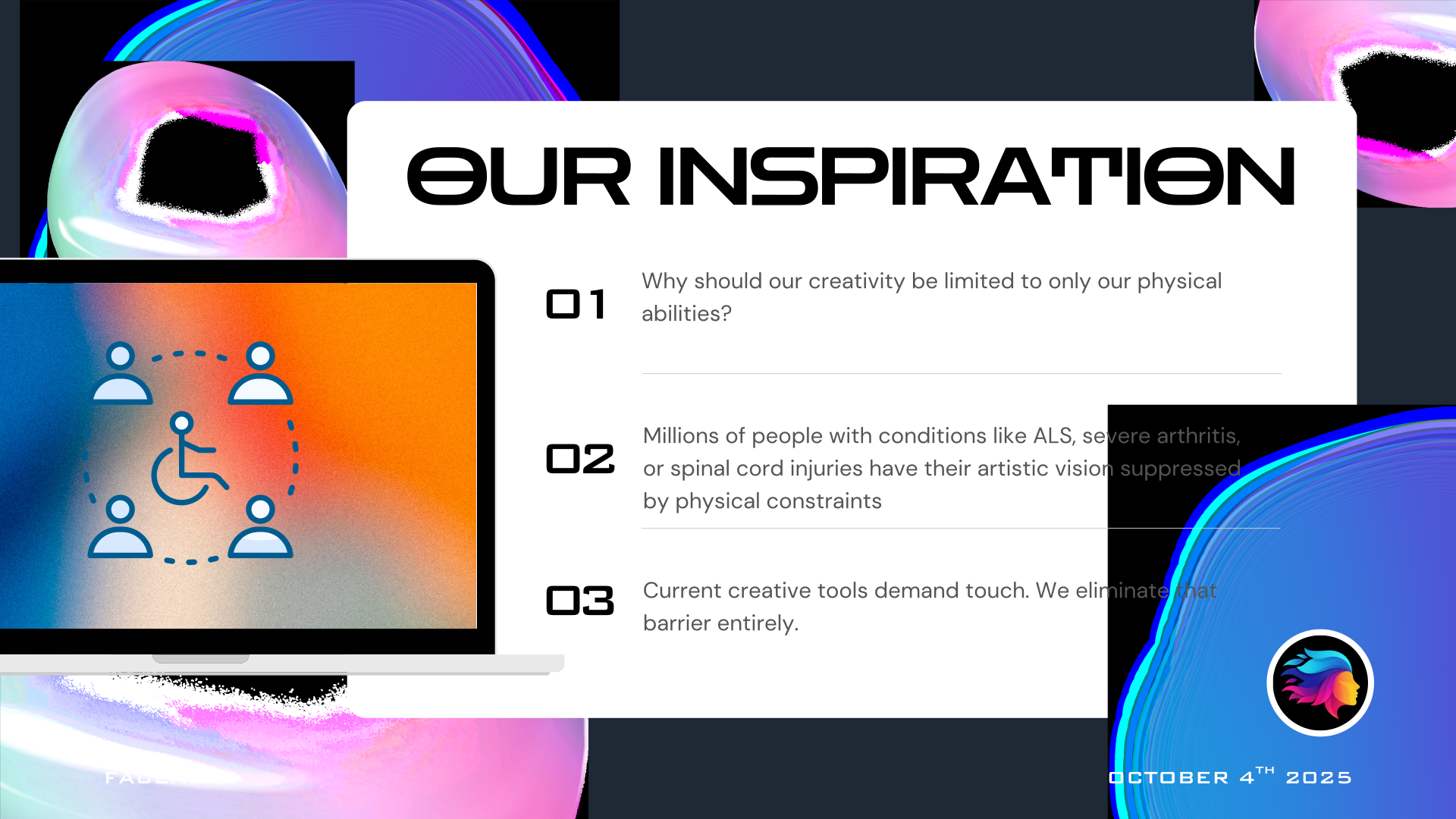
The story begins with a question: If creativity is purely mental, why is it gated by manual dexterity?
For millions with ALS, arthritis, or spinal cord injuries, the artistic world is suppressed by physical barriers. We built Faceable on a core belief: the human face—our most primal expressive surface—can be a zero-contact, high-resolution artistic controller, making expression truly universal.
What it is
The solution.
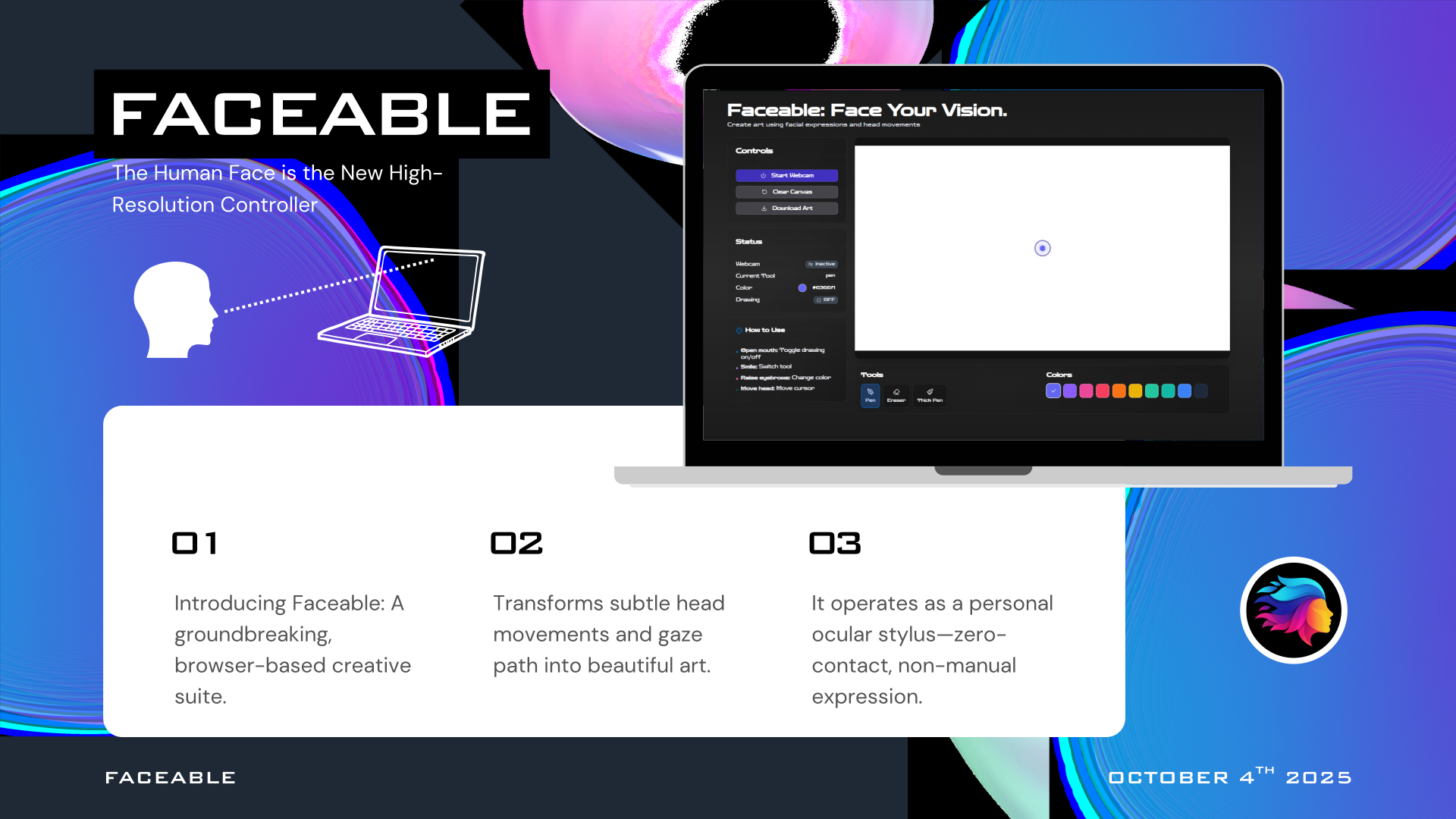
Faceable transforms your head movements and gaze into a digital brush, enabling you to paint without touching a mouse or keyboard. It acts as an Ocular Stylus, offering a silent, non-manual form of creation that provides instant feedback. This allows artists to bypass physical constraints and immediately realize their vision in a dynamic digital space.
How it works
Under the hood.
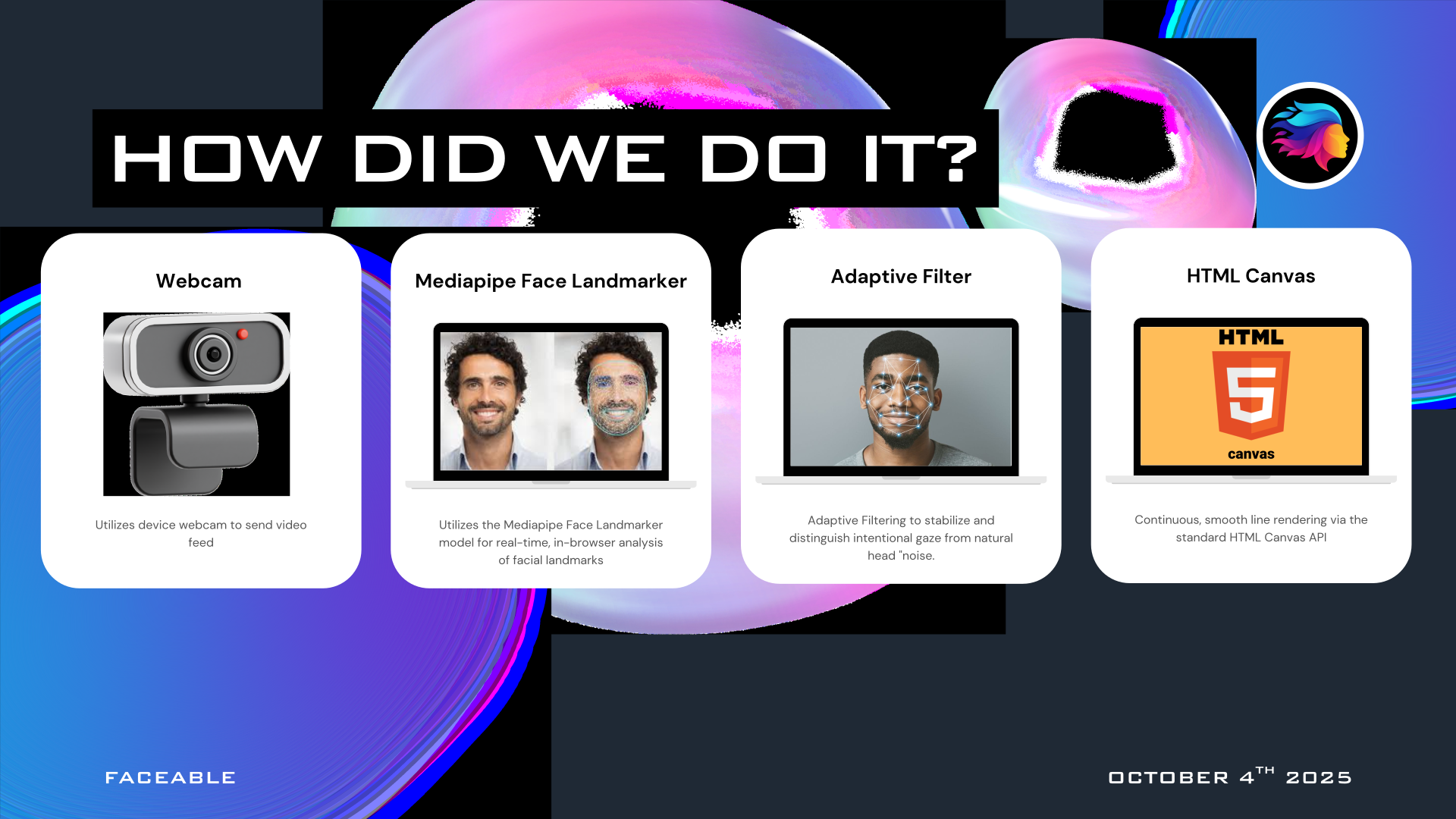
We built Faceable as a single, high-performance React application running entirely in the browser.
Challenges
Roadblocks we faced.
The biggest hurdle was Signal Noise.
Initial attempts resulted in erratic lines due to unconscious micro-movements (breathing, lighting changes). We solved this by implementing:
Takeaways
Lessons learned.
We learned that Reliability > Complexity.
We initially tried granular eye-tracking but pivoted to head-tracking/central-point tracking for a significantly more stable and forgiving user experience. This reinforced that technical excellence must always be in service of human usability.